
SCOUT’S MOTTO
“BE PREPARED”
Our Mission
The mission of Scouting America is to prepare young people to make ethical and moral choices over their lifetimes by instilling in them the values of the Scout Oath and Law.
Scout Law
A Scout is trustworthy, loyal, helpful, friendly, courteous, kind, obedient, cheerful, thrifty, brave, clean, and reverent.
Scout Oath
“On my honor I will do my best to do my duty to God and my country and to obey the Scout Law; to help other people at all times; to keep myself physically strong, mentally awake, and morally straight.”
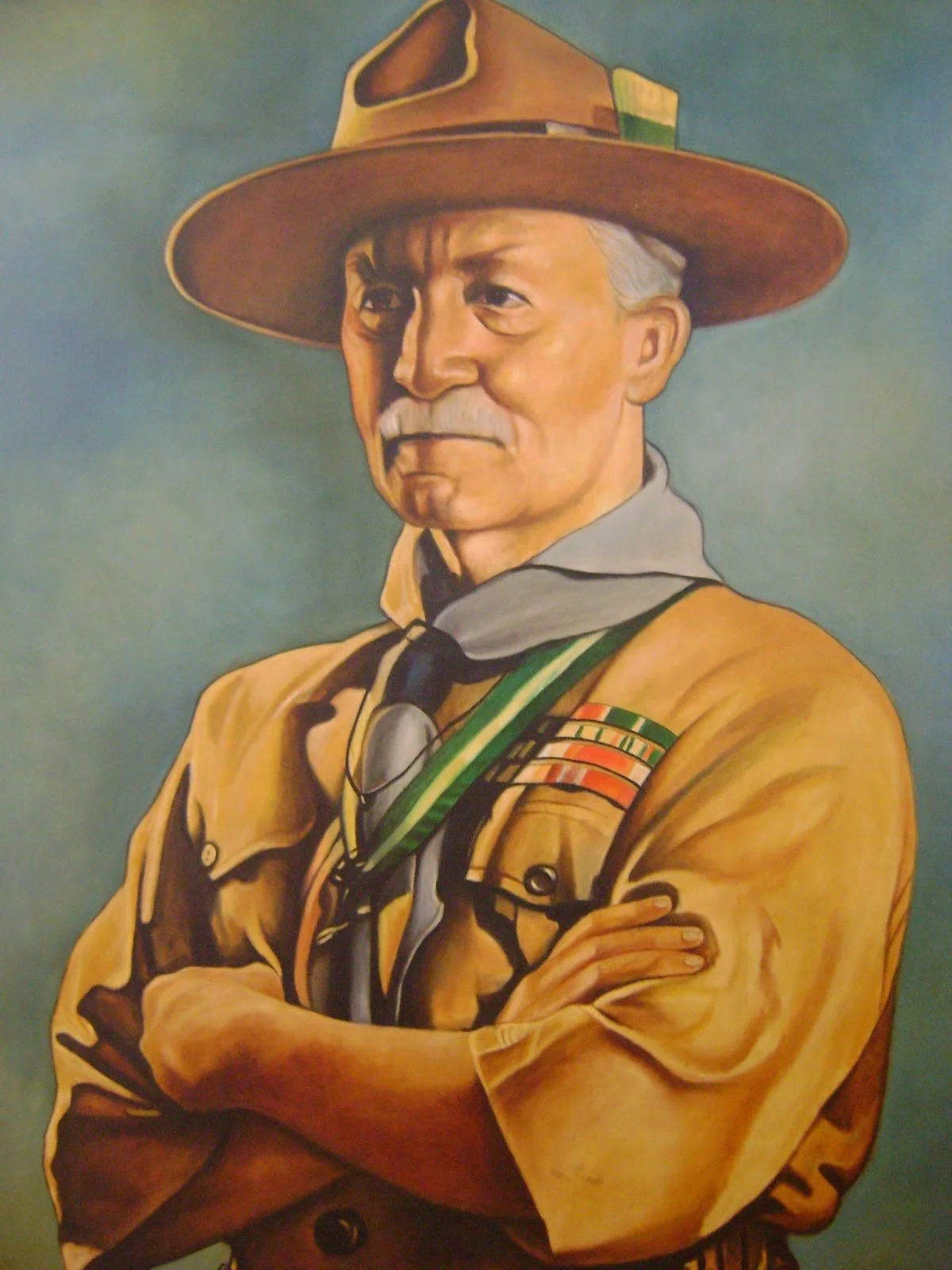
The Scout Movement was founded by Robert Baden-Powell (B-P), a renowned British Army officer and hero of the Siege of Mafeking during the Second Boer War (1899–1902) in South Africa. As commander, Baden-Powell defended the town of Mafeking during a long siege that lasted 217 days. With limited soldiers, he organized a group of boys (aged about 12–15) into the Mafeking Cadet Corps. These boys acted as messengers, scouts, and helpers around the town—delivering notes, assisting in hospitals, and even standing guard. They performed remarkably well, showing discipline and usefulness. This experience stuck with Baden-Powell: he saw how boys could learn responsibility, self-reliance, and practical skills when given real tasks and trust.
When he returned to Britain as a national hero (a major-general), he discovered something surprising. His military book Aids to Scouting had become popular—not with soldiers, but with boys and youth groups! They were reading it for fun, forming their own "Boy Scout" groups, and practicing tracking, observation, and outdoor skills. Baden-Powell realized these ideas could be adapted beyond the army—to build character, citizenship, fitness, and good habits in young people. He decided to rewrite the book for boys, turning military scouting into a fun, non-military program focused on adventure, nature, games, and moral values.
In August 1907, he tested his vision with an experimental camp on Brownsea Island in Dorset, England, bringing together about 20 boys from diverse backgrounds. Over two weeks, they camped outdoors, learned practical skills like tracking, knot-tying, first aid, and cooking, lived in small patrol teams, played games, and followed a simple code of honor around the campfire. The camp's success proved that adventure, teamwork, and self-reliance could build character and good citizenship in boys.
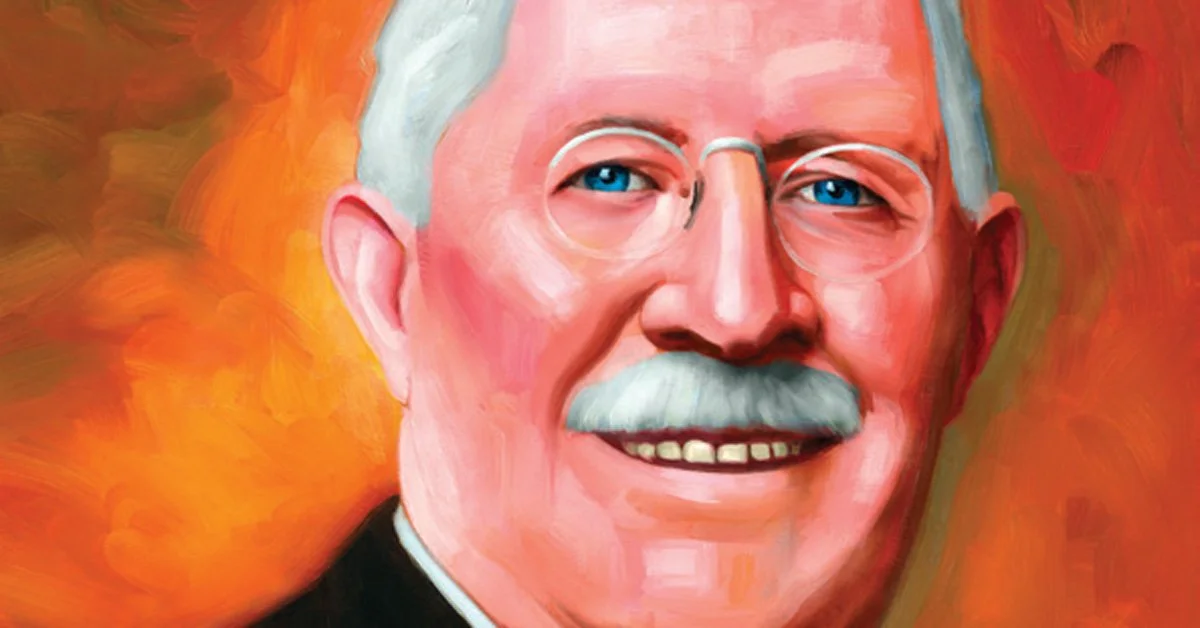
William D. Boyce was the key figure who brought and adapted Scouting to the United States, founding what is now Scouting America (formerly the Boy Scouts of America, or BSA). A successful Chicago-based newspaper and magazine publisher, entrepreneur, and world traveler, Boyce was in London in 1909 during a journey that included an African safari. He became lost in a thick London fog. A young boy in Scout uniform approached, offered directions, and personally guided Boyce to his destination to ensure he arrived safely. Grateful, Boyce tried to give the boy a tip. The Scout refused, replying, “No thank you, sir—I’m a Scout, and this is my Good Turn for the day.”
Intrigued by this act of selfless service and the unfamiliar concept of Scouting, Boyce learned more, obtained a copy of Robert Baden-Powell’s Scouting for Boys, and reportedly met with Baden-Powell himself. Boyce saw its great potential for American youth, and believed it could foster responsibility, self-reliance, leadership, and good citizenship among boys in the U.S. On February 8, 1910, he incorporated the Boy Scouts of America in Washington, D.C.
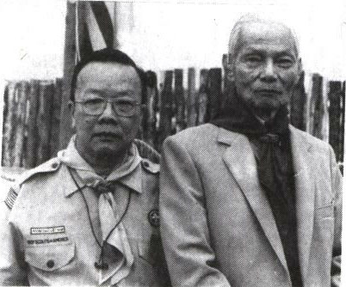
Trần Văn Khắc (1902–1994), an educator, gymnastic coach, and sports leader in late-1920s Hanoi, founded Vietnamese Scouting amid French colonial rule. In the late 1920s, inspired by Robert Baden-Powell's international Scouting movement—focusing on outdoor activities, discipline, self-reliance, athletics, and character building—he sought to adapt it for Vietnamese youth. Scouting then existed mainly for French colonials and elites, not broadly for Vietnamese.
In September 1930, with fellow athlete Tạ Văn Rục, he established Vietnam's first indigenous Scout unit at a Hanoi sports school: the Lê Lợi Troop (Thiếu Đoàn Lê Lợi), named after the heroic king. Called Đồng Tử Quân (Boy Scouts), it emphasized athletics alongside camping, skills, teamwork, and patriotism—allowing youth to pledge loyalty to their homeland under colonial restrictions. The troop grew rapidly, attracting youth and adults. In 1935, he organized Vietnam's first major Vietnamese Scout jamboree at Đakao Stadium in Saigon, uniting participants and boosting the movement. His efforts spread Scouting across regions, evolving into the national Vietnamese Scout Association (Hội Hướng Đạo Việt Nam), recognized by the World Organization in 1957. Learn more…